

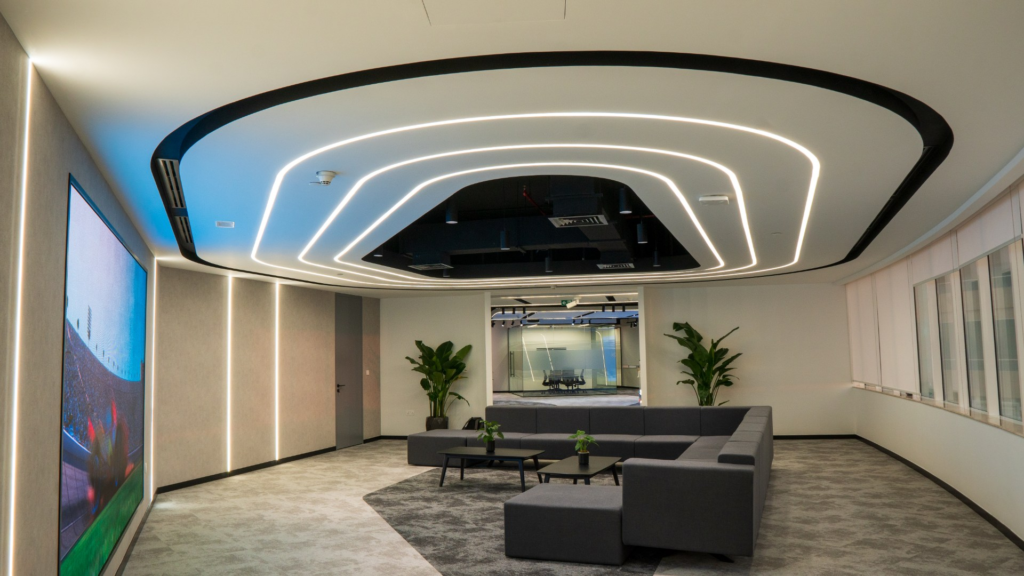
Dubai has always been a city that absorbs global design trends and then pushes them further. What emerges in European or American design studios tends to arrive here accelerated, refined, and applied to a market that has the appetite and the budgets to execute properly. After fifteen years as an interior fit-out company in Dubai and over 2,000 completed projects, we are in a position to say with clarity which trends are genuinely reshaping the way businesses think about their spaces and which ones are passing moments that will not survive a second refresh cycle.
What follows is our honest read on the directions that matter in 2026, informed by the briefs we are receiving, the projects we are delivering, and the feedback we hear from clients six months after they move in.
Biophilic Design Has Moved from Trend to Standard
A few years ago, incorporating living elements into a commercial interior felt like a statement. Today, when we present a workspace design that does not include biophilic elements, clients notice the absence. Biophilic design, the intentional integration of natural materials, living plants, natural light, and organic forms into the built environment, has become a baseline expectation in high-specification Dubai workspaces rather than a premium option.
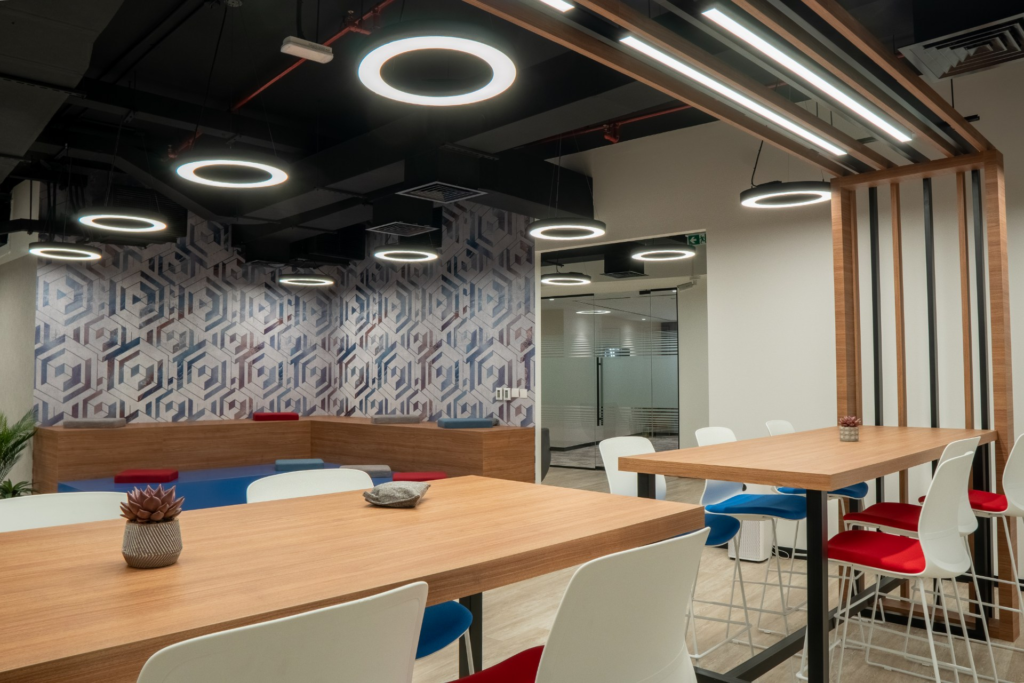
What has changed is the sophistication of the execution. Early biophilic interiors often amounted to a plant wall in the reception and some timber veneer on meeting room doors. What we are designing now is genuinely considered: moss walls and vertical gardens maintained through integrated irrigation systems, material palettes that combine natural stone, raw timber, and textured plasters in a way that feels cohesive rather than collected, and ceiling and lighting designs that mimic the quality and direction of natural light in spaces that cannot access it directly.
The functional case for biophilic design is well supported. Environments with natural elements consistently score higher on occupant wellbeing, concentration, and reported satisfaction. For businesses competing to attract and retain talent in Dubai’s competitive employment market, this is no longer a soft argument.
The End of the Uniform Open Plan
The open-plan office had its moment, and it produced a generation of workers who have strong opinions about what they need that the open plan failed to deliver: acoustic privacy, visual focus, and a sense of ownership over their immediate working environment. As an interior fit-out company in Dubai, we have watched the brief evolve from “we want open plan” to “we want openness, but with choice.”
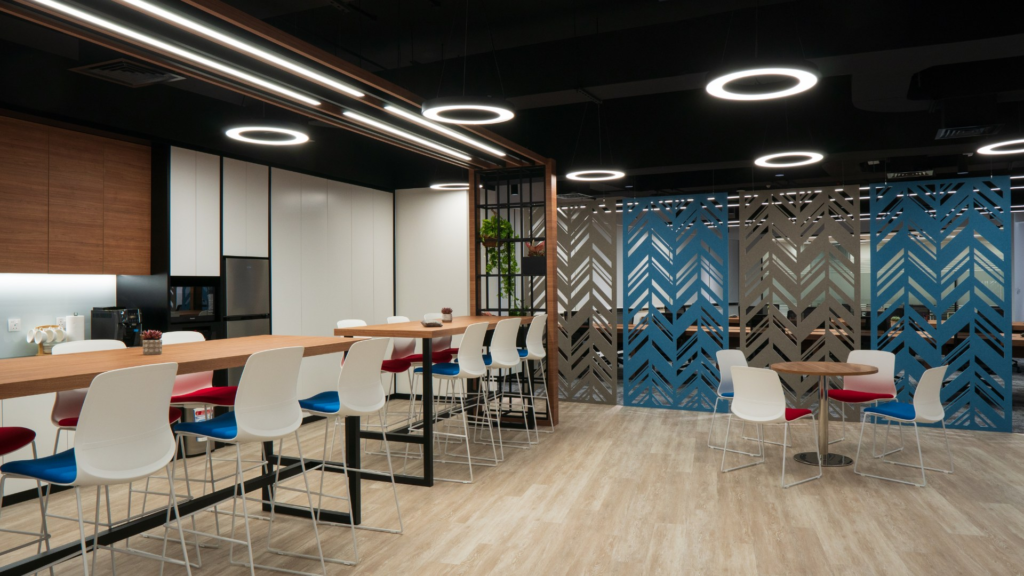
The design response is what practitioners are calling activity-based working, and we are implementing it consistently across our current project pipeline. Rather than a homogeneous sea of workstations, the spaces we are designing now offer a deliberate variety of settings: open collaborative benches, enclosed focus booths, semi-private lounge seating, phone rooms, informal meeting alcoves, and formal enclosed meeting rooms. The employee chooses the setting that matches the task.
The fit-out implication is that this kind of environment requires more design intelligence per square metre than a simple open plan. Getting the proportions right between different setting types, ensuring acoustic separation where it is needed without creating a labyrinthine floor plate, and specifying furniture that performs at a quality level that makes people actually want to use the varied settings are all disciplines we have refined across hundreds of projects.
Materiality as Brand Language
One of the most interesting shifts we have observed in recent commercial interiors is how deliberately companies are using material choices to communicate identity. The sterile white office with grey carpet is not just aesthetically dated; it is a missed brand opportunity.
The businesses whose spaces we are most proud of in our recent portfolio are the ones that engaged seriously with the question of what their physical environment should say about who they are. A financial technology firm we worked with recently chose a material palette of warm brass, deep green joinery, and polished concrete that communicated both the seriousness of finance and the energy of technology in a combination that felt genuinely theirs. A co-working space operator specified exposed services, reclaimed timber, and industrial lighting that deliberately contrasted with the polished glass tower it occupied, creating a productive tension that was entirely intentional.
As an interior fit-out company in Dubai, our role in these conversations is to translate brand intent into material and spatial decisions that hold up over time and improve with age rather than dating within two years.
Wellness Infrastructure Is Becoming Non-Negotiable
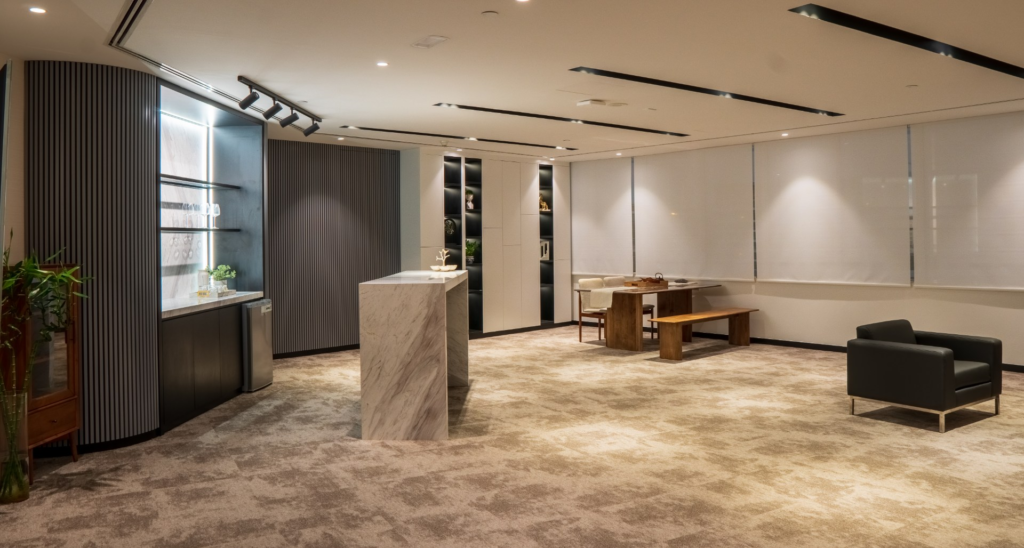
The post-pandemic conversation about workplace wellness has matured from an HR talking point into a design brief requirement. Clients are now specifying wellness rooms, prayer rooms, high-quality shower and changing facilities, and dedicated quiet zones not as afterthoughts but as named requirements in the programme from the first meeting.
The WELL Building Standard, which certifies spaces on dimensions including air quality, water, nourishment, light, movement, thermal comfort, sound, and mind, is increasingly referenced in Dubai commercial interiors, particularly by multinational tenants who benchmark their regional offices against global standards.
What this means in practice is that the mechanical and electrical specification underpinning a fit-out, the air handling, the lighting control systems, the acoustic performance of partitioning, is now as much a wellness and productivity consideration as it is a compliance and comfort one.
Talk to Our Team About Your Next Project
At Westbrook Interiors, we bring these trends to life across workspaces, retail environments, and institutional interiors throughout Dubai and the UAE. Our design team is up to date on what is working, what is not, and how to apply the directions that genuinely improve how people experience and perform in a space.
Visit us at M12, Al Wasl Building, opposite Dubai Mall Metro Station on Sheikh Zayed Road, email hello@westbrook-interiors.com, or call +971 4 612 5000 to start the conversation.